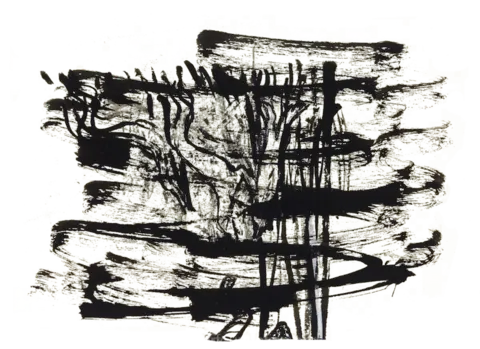
Dali, and Pollock, and Sooster...
“The viewer of Surrealist works finds themselves in a state of uncertainty - what in theatre and cinema is called “suspense”. They seem to be at home; they are addressed in the language of homo sapiens. At the same time, the viewer does not know where they are, nor in what language they are being addressed. They have found themselves in a labyrinth where movement in one direction leads elsewhere.
The subsequent fate of chance-based methods resembled the fate of a tireless traveller… They were acknowledged by the heirs of Surrealism, such as Salvador Dalí; by the American founders of Neo-Modernism, Jackson Pollock and others; by European admirers of paradox, ambiguity, and cultural barbarism, such as Yves Klein; and by the founders of unofficial underground art in the Soviet bloc, such as Ülo Sooster and Anatoly Zverev. All of them placed their hopes in chance and in pure vital energy, believing that in this way they could exclude control by rational consciousness and by the treacherous cultural self.”
From Alexander Yakimovich’s book “The Age of Devastating Creations: From the History of Art and Thought of the Twentieth Century,” 2009.
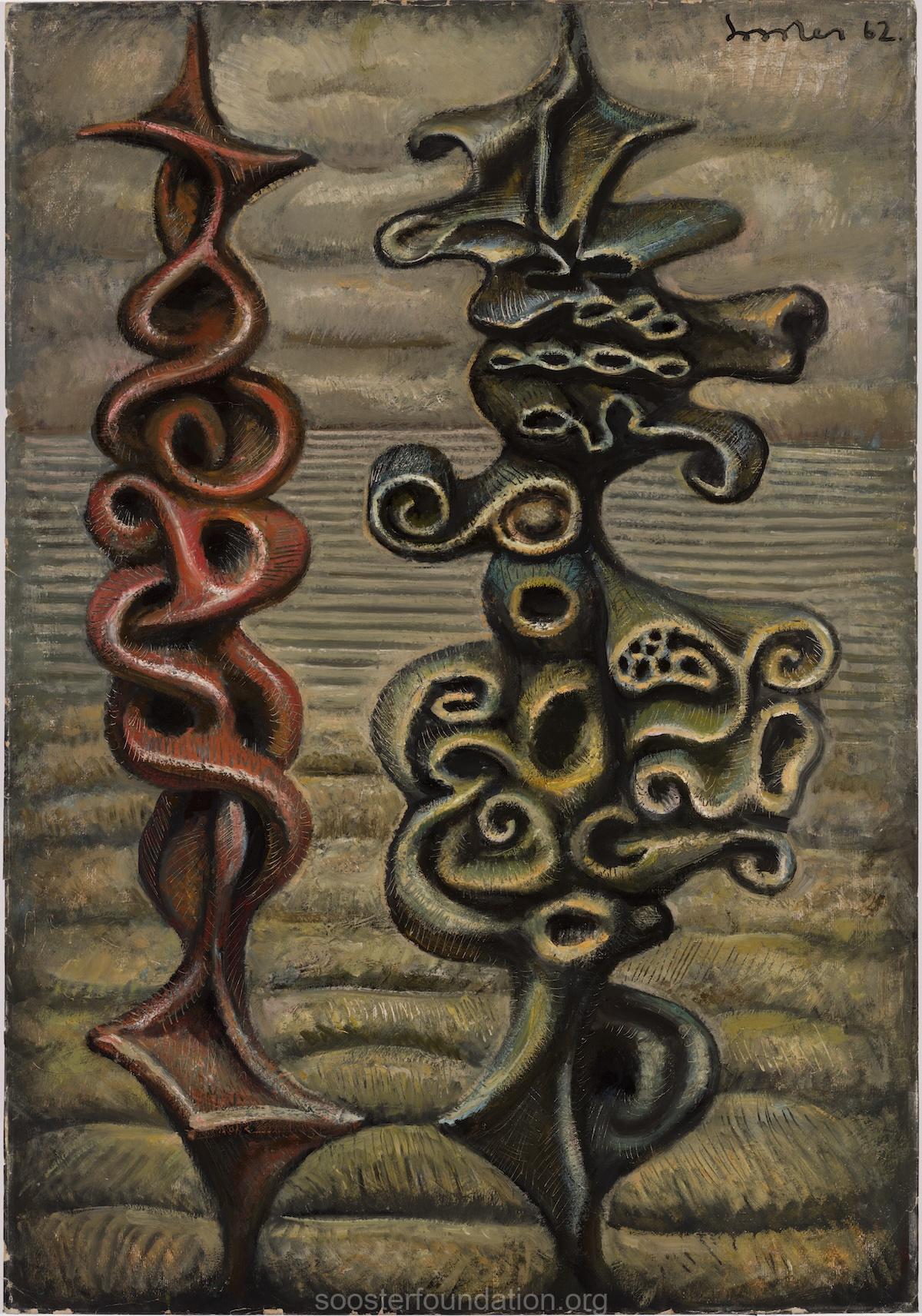
In the photo: Ülo Sooster’s painting “Large Junipers,” 1962, Collection of the Tartu Art Museum.